No Front Seam vs Seamless Leggings: Which Is Better for Yoga, Pilates and Hot Yoga?
Some leggings feel smooth in product photos but become distracting once the body starts moving. A front seam may pull during deep stretches. A soft seamless knit may feel comfortable at first but lose hold in a heated class. For yoga, Pilates and hot yoga, seam structure is not just a small design detail—it can change how leggings fit, support and perform.
For yoga, Pilates and hot yoga, the difference between no front seam leggings and seamless leggings is not just a styling detail. It can affect front-panel smoothness, friction, support, sweat comfort, waistband stability and how confident the wearer feels during deep stretches or heated movement.
The confusing part is that these two terms are often used together in activewear marketing. In reality, they describe different design choices. No front seam leggings focus on the front panel. Seamless leggings focus on the way the garment is constructed.
Key idea: No front seam leggings remove the visible front center seam, while seamless leggings usually use circular-knit construction to reduce stitched seams across the garment. One is a front-panel design choice. The other is a garment-construction method.
This guide compares the two styles through comfort, fit, fabric behavior and movement needs, with a closer look at yoga, Pilates and hot yoga use cases.
The Core Difference: Front Seam Design vs Seamless Construction
No front seam leggings remove the vertical seam that usually runs through the front center of traditional leggings. This design creates a smoother front panel and can reduce visible seam lines during yoga poses, Pilates movement and everyday wear.
Seamless leggings, on the other hand, usually refer to leggings made with circular knitting or reduced-seam construction. Instead of being assembled from multiple cut fabric panels, the garment body is knitted in a tube-like structure with fewer stitched seams.
The important distinction is simple: no front seam describes what happens at the front of the leggings, while seamless describes how the leggings are made.
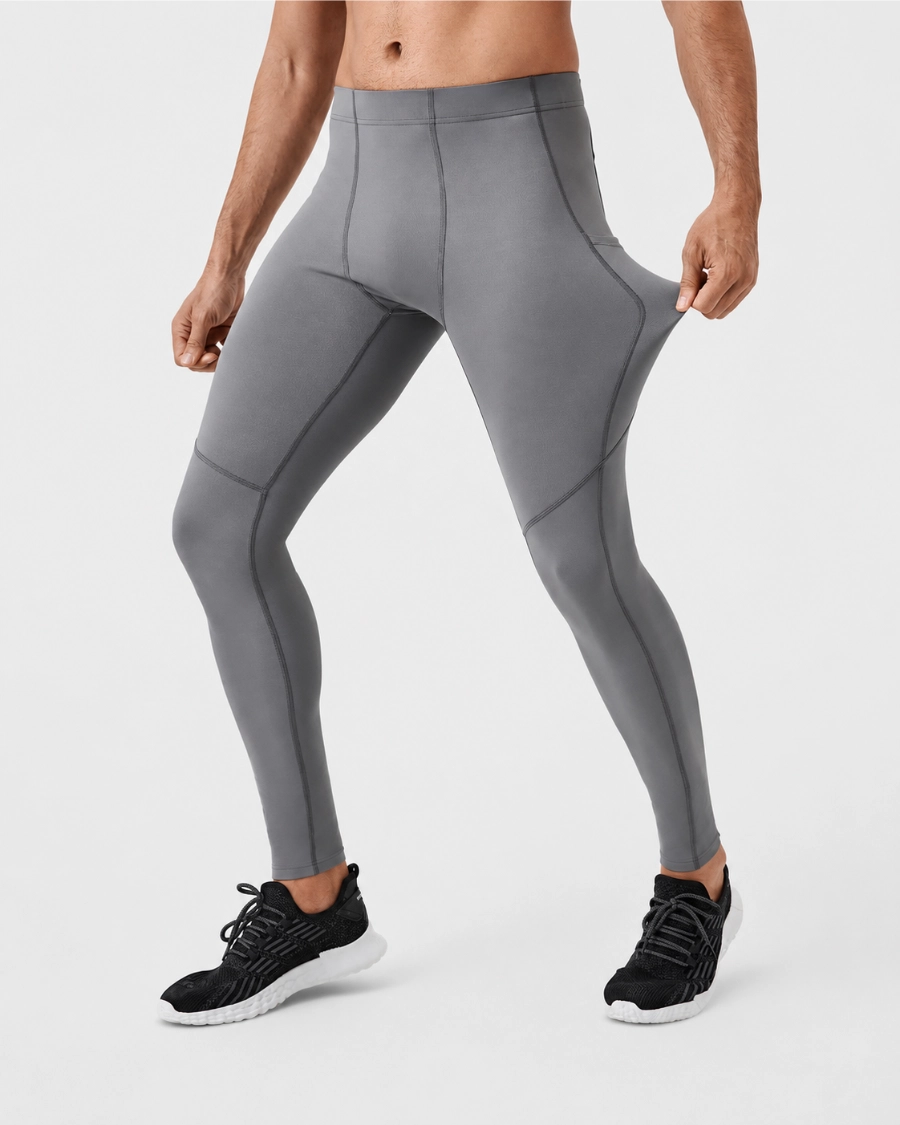
In practice, these categories can overlap. A legging can have no front seam while still using side seams, back seams, inner-leg seams, a gusset or a structured waistband. A seamless legging can feel smooth and stretchy, but it may still include finishing points or reinforced zones.
What Are No Front Seam Leggings?
No front seam leggings are designed without the traditional front center seam. In standard leggings, this seam can create a visible line through the crotch area. For some wearers, that line can cause discomfort, front-area pressure, fabric pulling or an awkward appearance during movement.
More importantly, a no front seam design keeps the front panel cleaner during yoga, Pilates, stretching and studio workouts. It can make the leggings feel more discreet in poses where the hips bend, rotate or compress.
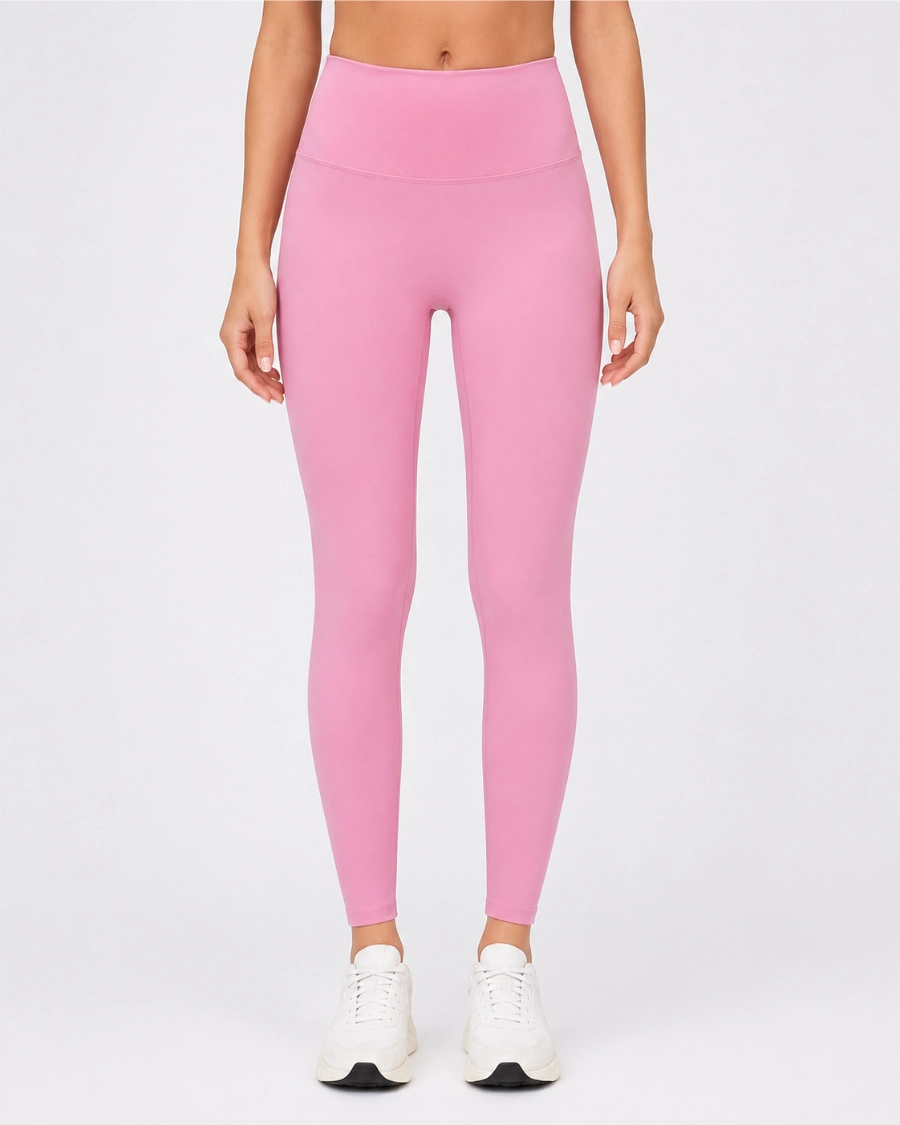
Often overlooked: No front seam does not mean “no seams anywhere.” Many no front seam leggings still use seams for structure, shaping, pockets, waistband support and garment stability.
Common construction details may still include:
- side seams
- back seams
- inner-leg seams
- waistband seams
- gusset construction
- pocket seams
- back yoke seams
At its core, no front seam leggings are often useful when the wearer wants a smoother front look while keeping some structured support from the rest of the garment.
What Are Seamless Leggings?
Seamless leggings are usually made using circular knitting technology. Instead of cutting several flat fabric pieces and stitching them together, the garment body is knitted in a tube-like structure with fewer stitched seams.
Beyond that, seamless leggings often create a soft, stretchy and second-skin feel. Because there are fewer seam ridges, they may reduce rubbing during repeated movement, long wear, gym workouts, Pilates or daily athleisure use.
Common benefits of seamless leggings include:
- fewer friction points
- smooth body-hugging fit
- high stretch
- lightweight feel
- body-contouring knit zones
- minimal seam appearance
The challenge: Seamless does not automatically mean better support. If the knit recovery is weak, seamless leggings may feel soft at first but lose hold at the waistband, knees or seat after movement.
No Front Seam vs Seamless Leggings: Key Differences
Which one is better depends on the use case. The real decision is not choosing a trend name, but matching the construction to the movement, fabric, waistband and target customer.
| Feature | No Front Seam Leggings | Seamless Leggings |
|---|---|---|
| Main purpose | Removes the visible front center seam | Reduces seams across the garment |
| Construction | Often cut-and-sew | Usually circular-knit |
| Best benefit | Smooth front appearance and modest fit | Second-skin stretch and fewer friction points |
| Support | Can keep side, back or gusset seams for structure | Often softer, sometimes less structured |
| Fit risk | Poor gusset or front rise can still cause pulling | Weak recovery can sag, feel thin or lose hold |
| Best use | Yoga, Pilates, studio wear, smooth front fit | Low-friction workouts, lounge, contour fit, soft activewear |
| Design flexibility | Easier to add pockets, side panels and shaping seams | More dependent on knitting structure and zone tension |
Overall, no front seam leggings are stronger when front smoothness and structured support both matter. Seamless leggings are stronger when low-friction comfort and a soft contour feel matter more.
Which Is Better for Yoga?
For yoga, no front seam leggings are often a practical choice because they reduce front-area distraction during poses such as forward folds, lunges, pigeon pose, seated stretches and deep hip-opening movements.
In addition, yoga leggings need to move without constant adjustment. A smooth front panel can help, but the waistband, rise height, gusset and stretch recovery still matter.
Core yoga fit rule: A legging that looks smooth while standing still still needs to stay stable during bending, twisting, stretching and seated movement.
A good yoga legging should:
- stay stable during bending and stretching
- avoid front pulling
- keep enough opacity under stretch
- feel soft without losing recovery
- avoid waistband rolling
- allow comfortable hip movement
From a practical perspective, no front seam is not a complete fit solution. If the waistband rolls down or the fabric stretches out, the leggings will still feel unstable.
Which Is Better for Pilates?
Pilates adds a different set of demands. In mat Pilates and reformer Pilates, the body moves through repeated core work, hip flexion, leg lifts, bridges, kneeling positions and controlled transitions.
No front seam leggings may feel more discreet during deep core movements and seated positions. Seamless leggings may feel comfortable because they reduce seam friction. Another detail worth noting is that Pilates exposes waistband problems very quickly because the body repeatedly folds, extends and rotates.
| Pilates Movement Need | Why It Matters | What to Check |
|---|---|---|
| Core work | Waistband pressure and rolling become obvious | High-rise hold, waistband recovery, front rise balance |
| Hip flexion | Front panel may pull or bunch | Gusset shape, crotch curve, seam placement |
| Reformer movement | Some slick fabrics may slide more on equipment | Surface finish, grip feel, fabric hand feel |
In essence, Pilates leggings need comfort and control at the same time. Seamless construction may feel softer, while no front seam construction may offer a cleaner front appearance with more shaping options.
Which Is Better for Hot Yoga?
For hot yoga, seam structure is only one part of the decision. Sweat handling becomes just as important.
Hot yoga leggings need to manage heat, moisture, stretch and opacity at the same time. A legging can be no front seam and still feel too warm. A seamless legging can feel lightweight but still lose support when wet.
Hot yoga fit note: Hot yoga leggings should not be judged by seam design alone. Moisture-wicking performance, quick-dry feel, wet opacity, waistband hold and fabric recovery can matter just as much as no front seam or seamless construction.
For hot yoga, buyers and brands should look at:
- moisture-wicking performance
- quick-dry feel
- fabric weight
- wet opacity
- waistband hold after sweating
- stretch recovery after repeated poses
- breathability
- dark vs light color performance
The challenge is that “soft” and “hot-yoga ready” are not always the same thing. Some wearers prefer soft brushed leggings for comfort, while others prefer more durable training fabrics that hold better during heated classes.
Why 25-Inch and 7/8 Leggings Keep Coming Up
A 25-inch inseam is often close to a 7/8 length on many wearers. This length appears frequently in yoga and Pilates conversations because it sits between full-length and cropped leggings.
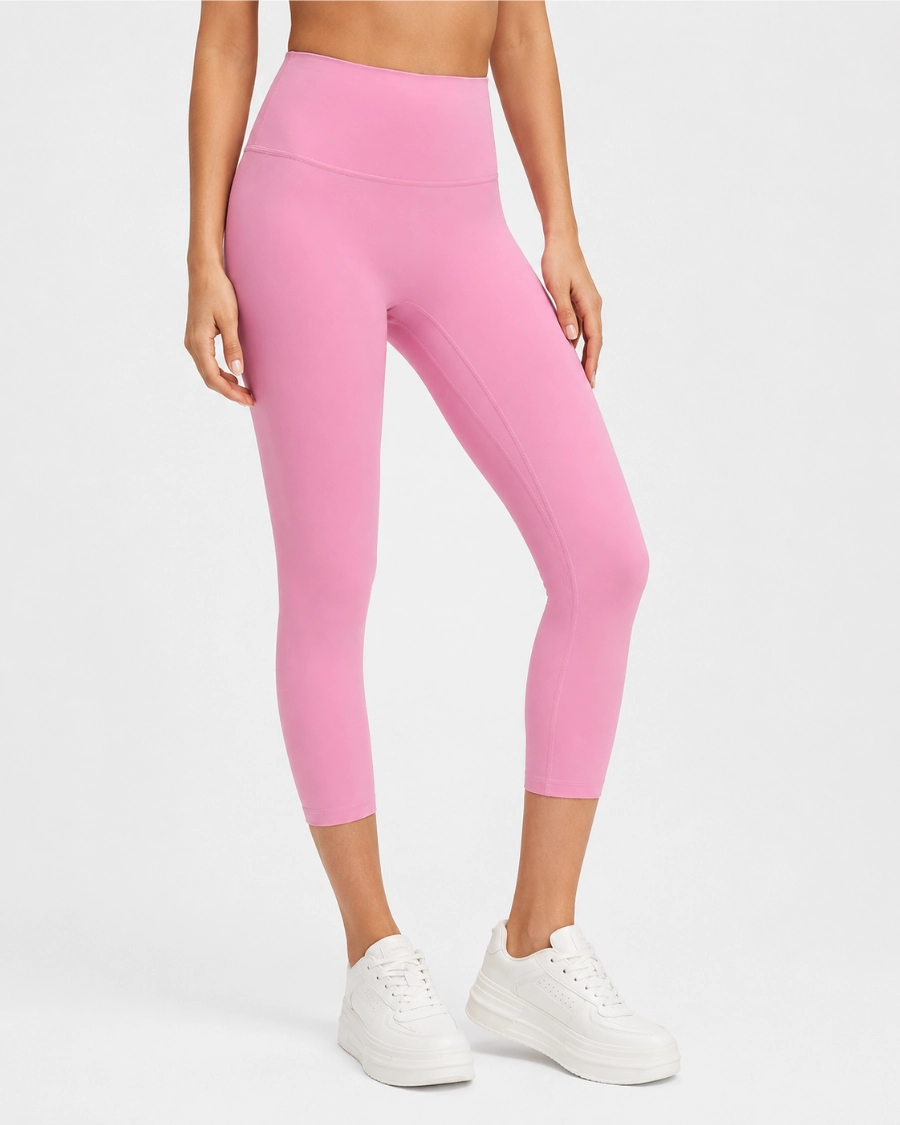
This detail matters for hot yoga. A full-length legging can feel warmer in heated classes, while a cropped legging may feel too casual or too exposed for some wearers.
Product insight: For activewear brands, inseam is not just a size detail. It can become a product-line decision. A leggings collection may include 23″, 25″ and 28″ inseam options to cover petite, standard and full-length preferences.
For yoga, Pilates and hot yoga, 25-inch leggings can offer:
- less heat than full-length leggings
- more coverage than cropped leggings
- a clean studio look
- easier class-to-daily-wear styling
- better fit across different heights
- a useful option for men or unisex buyers who want coverage without excess ankle fabric
Common Misunderstandings
Because activewear marketing often uses similar words, shoppers may confuse no front seam, seamless, seamed and regular leggings. What is often overlooked is that these terms describe different parts of the product.
| Misunderstanding | Reality |
|---|---|
| No front seam means seamless | No front seam refers to the front panel. Seamless refers to broader garment construction. |
| Seamless means no seams anywhere | Many seamless leggings still have waistband finishing, reinforced zones or structural points. |
| No front seam always prevents camel toe | It may help, but front rise, gusset shape, fabric recovery, compression and sizing still matter. |
| Seamless leggings are always better for workouts | Some workouts need more compression, structure or waistband support than a soft seamless legging can provide. |
| Thicker leggings are always better for hot yoga | Heavy fabric may improve coverage, but it can feel too warm in heated classes. |
The S.M.O.O.T.H. Fit Framework
When comparing no front seam and seamless leggings, do not judge the product by one feature. The core issue is how the leggings behave during real movement, heat, sweat and repeated wear.
S.M.O.O.T.H. Fit Framework: Smooth front, Movement stability, Opacity, Overheat control, Tension recovery and Hold. This framework helps shoppers and brands compare leggings beyond marketing labels.
| Factor | Meaning | Question to Ask |
|---|---|---|
| S — Smooth front | Front panel appearance and pressure control | Does the front panel stay clean without pulling or bunching? |
| M — Movement stability | How the leggings stay in place during movement | Do they shift during yoga, Pilates or hot yoga? |
| O — Opacity | Coverage under stretch and sweat | Does the fabric remain acceptably opaque? |
| O — Overheat control | Heat and moisture comfort | Does the fabric feel too warm or heavy in heated classes? |
| T — Tension recovery | How the fabric returns after stretch | Does the fabric recover after bending, squatting and washing? |
| H — Hold | Waistband and body support | Does the waistband stay up without rolling, sliding or digging? |
Overall, no front seam is helpful, but it is not the whole product. Seamless construction is comfortable, but it is not the only route to a good fit.
What This Means for Activewear Brands
For brands developing workout leggings, the decision should start with target use. A hot yoga legging needs different fabric behavior from a lounge legging. A Pilates legging needs a different balance from a running tight. A men’s or unisex studio legging may need more attention to front modesty and inseam length.
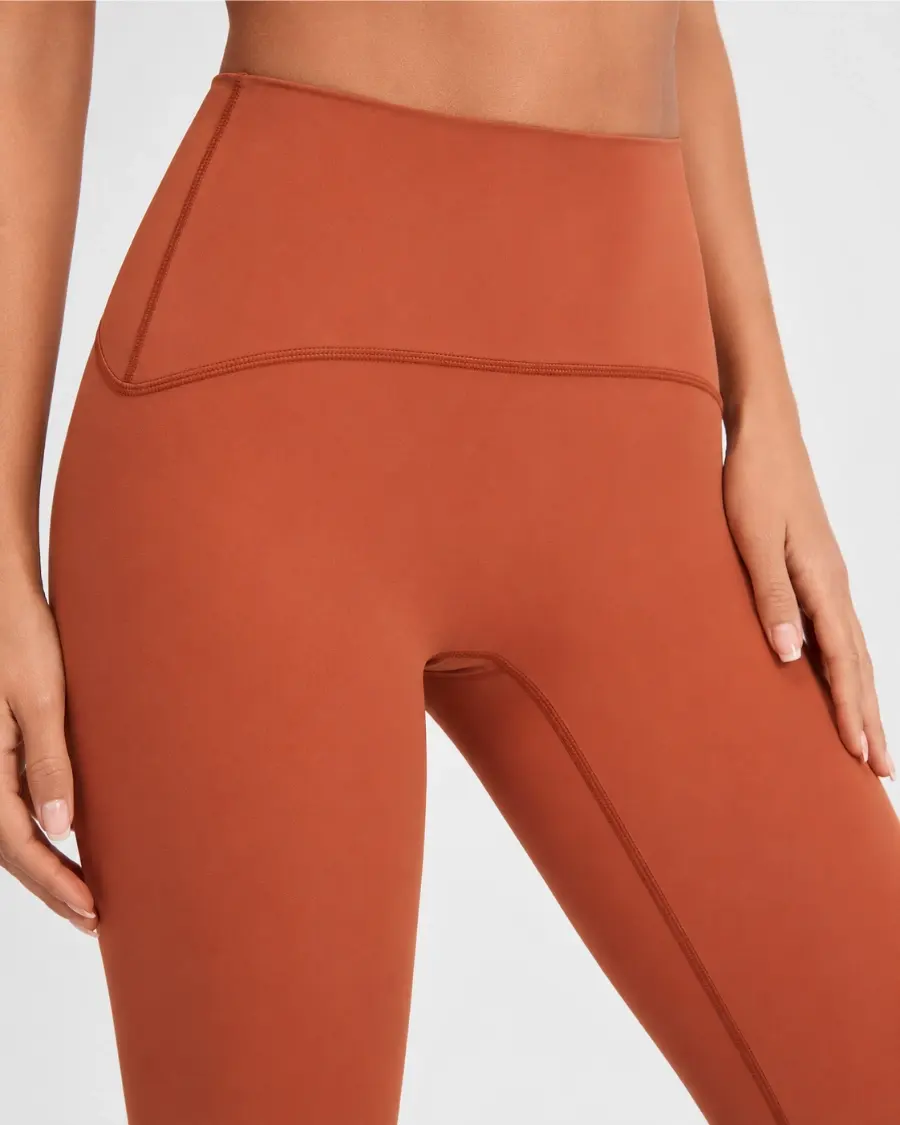
More importantly, no front seam is not a single magic feature. Seam placement, waistband recovery, gusset design, fabric weight, stretch recovery, size grading and intended activity all need to work together.
Before developing no front seam or seamless leggings, brands should confirm:
- target activity: yoga, Pilates, hot yoga, gym, lounge or daily wear
- front rise and crotch curve
- gusset shape and placement
- waistband height and recovery
- fabric blend and GSM
- nylon-spandex vs polyester-spandex direction
- brushed vs cool-touch surface
- 25″ / 7/8 / full-length inseam options
- opacity under stretch
- sweat handling
- size grading across S/M/L or extended sizes
- whether the product needs pockets, side panels or shaping seams
How Brands Should Review Leggings Samples Before Bulk Production
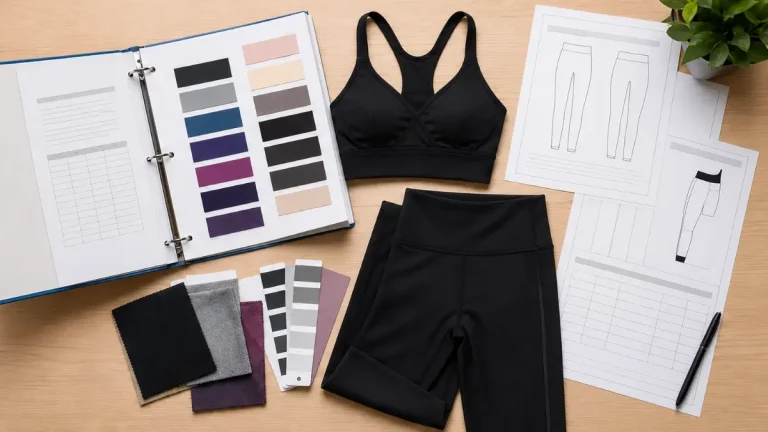
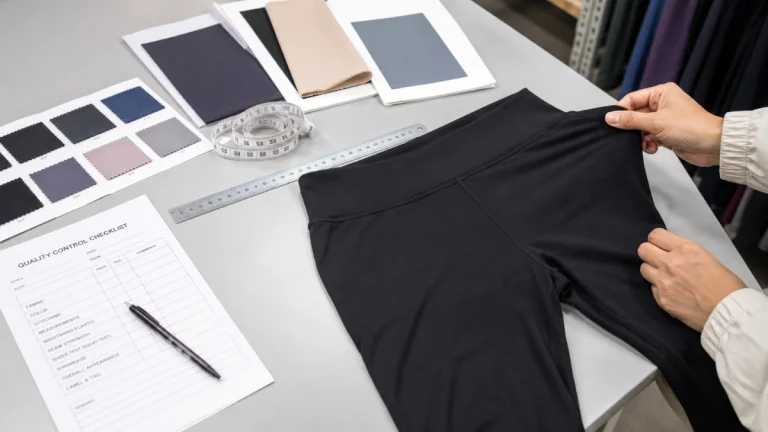
Marketing terms such as “seamless,” “no front seam,” “squat-proof,” “quick-dry” or “buttery soft” should not be approved only by reading a product description. The more practical approach is to review the sample on body, during movement and under the intended use case.
| Claim | What to Review in Samples | Why It Matters |
|---|---|---|
| No front seam | Front panel smoothness, gusset shape, front rise and movement comfort | A no-front-seam design can still pull, bunch or feel uncomfortable if the pattern is not balanced. |
| Seamless feel | Knit recovery, waistband hold, stretch return and body contour | A soft seamless fabric may feel good at first but still lose support during repeated movement. |
| Hot yoga ready | Sweat handling, drying feel, wet opacity and waistband stability on samples | Heated classes expose fabric weight, breathability and recovery problems faster than normal wear. |
| Squat-proof coverage | Opacity under stretch, movement, lighting and multiple size samples | Coverage problems often appear only when the fabric is stretched on body, not when the garment is flat. |
For a deeper opacity and sample approval process, read our squat-proof leggings sample testing guide. For hot-yoga fabrics, brands should ask the supplier to review sweat handling, drying feel, wet opacity and waistband stability on samples before confirming bulk production.
Custom Workout Leggings Development with Muzyoga
Muzyoga supports custom workout leggings development for activewear brands, yoga studios, boutique fitness labels and private label buyers.
For no front seam or seamless-look leggings projects, our team can help review fabric direction, hand feel, compression target, no-front-seam pattern feasibility, 25″ / 7/8 / full-length inseam options, waistband construction, logo customization, label options, color development and sample confirmation before bulk production.
Planning a custom leggings collection?
Explore workout leggings styles or send us your target fabric, reference photo, size range and branding requirement.
FAQ
Are no front seam leggings the same as seamless leggings?
No. No front seam leggings remove or relocate the front center seam. Seamless leggings usually use circular-knit or reduced-seam construction. A no front seam legging can still have side seams, back seams, inseams, waistband seams or a gusset.
Are no front seam leggings better for yoga?
They can be better for wearers who want a smoother front appearance and less front-area pressure. Beyond that, yoga leggings also need waistband stability, fabric recovery, opacity and comfortable stretch.
Are seamless leggings better for Pilates?
Seamless leggings can feel soft and low-friction, which many Pilates users like. The challenge is that Pilates also needs waistband hold, fabric recovery and controlled movement. Seamless is not automatically better for every body or every class.
What leggings are best for hot yoga?
Hot yoga leggings should manage sweat, heat, opacity and movement. Look for moisture-wicking fabric, quick-dry performance, stable waistbands, stretch recovery and enough coverage when wet.
Do no front seam leggings prevent camel toe?
They can reduce the visible front center line, but they do not guarantee a perfect front fit. Front rise, gusset shape, fabric recovery, compression and sizing all affect the result.
What is the difference between seamless and regular leggings?
Seamless leggings are usually knitted with fewer stitched panels. Regular or seamed leggings are often made from cut fabric pieces sewn together. Regular leggings can provide more structured shaping, while seamless leggings often feel softer and lower-friction.
Is 25-inch inseam good for yoga and Pilates?
For many wearers, 25″ inseam works as a 7/8 length. It offers more coverage than cropped leggings and less heat than full-length leggings, making it useful for yoga, Pilates, barre and hot classes.
Final Takeaway
No front seam and seamless leggings are not competing trends with one universal winner. They solve different problems.
Choose no front seam leggings when front smoothness, modest fit and structured support matter. Choose seamless leggings when second-skin comfort, low friction and a soft contour feel matter more.
Ultimately, the best leggings for yoga, Pilates and hot yoga are not defined by seam wording alone. They need the right fabric, waistband, rise, gusset, recovery, opacity and length for the movement they are designed to support.