How to Review a Size Set Sample for Activewear Before Bulk Production
A size set sample is a group of garments made in selected or all graded sizes to check whether the size range is ready for bulk production. In a standard development sequence, this follows base-size fit approval and pattern grading.
Your size M legging can fit perfectly while the XS gaps at the back waist or the XL pulls through the rise. A sports bra can look balanced in the base size while a larger size changes neckline coverage or underband fit.
One good fit sample proves one size. It does not prove the whole range.
What Is a Size Set Sample?
A fit sample is where you approve the base size. Once that direction is accepted, pattern grading creates the smaller and larger patterns needed for the planned size range.
A size set uses those graded patterns to make physical samples in other sizes, so you can check the result before production.
| Sample | Main Question | What It Should Prove |
|---|---|---|
| Fit Sample | Does the base-size garment fit as intended? | Shape, balance, measurements, fit and relevant movement in the development size. |
| Size Set Sample | Did that approved fit grade correctly into other sizes? | Measurements, size progression, proportion, fit and product function across the range. |
| Pre-Production Sample | Is the final production package ready to reproduce? | Final fabric, trims, construction, branding and production specifications. |
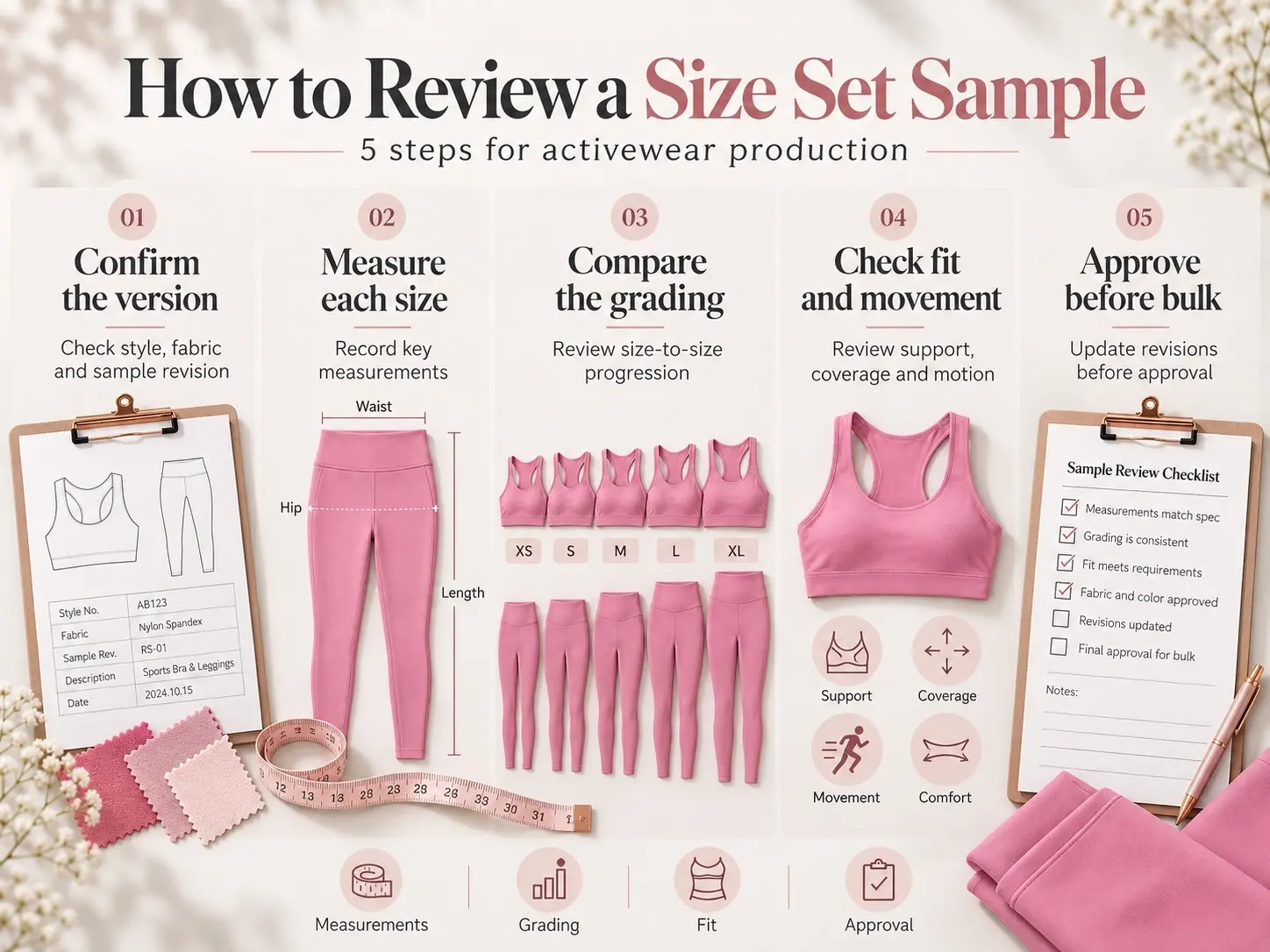 Five steps for reviewing an activewear size set before bulk production: version, measurements, grading, fit and approval.
Sample names vary between factories, so confirm what each submission is meant to approve. Passing a size set does not automatically mean every pre-production detail has also been approved.
If you need the complete route from the first development sample to bulk approval, see our activewear sampling process. Here, the question is narrower: is the graded size range ready to move forward?
Before You Review the Size Set, Confirm the Version
Do not start by measuring the waistband or inseam. Start by confirming what you are actually reviewing.
You can measure every point correctly and still approve the wrong thing if the samples were made from an old pattern or measurement chart.
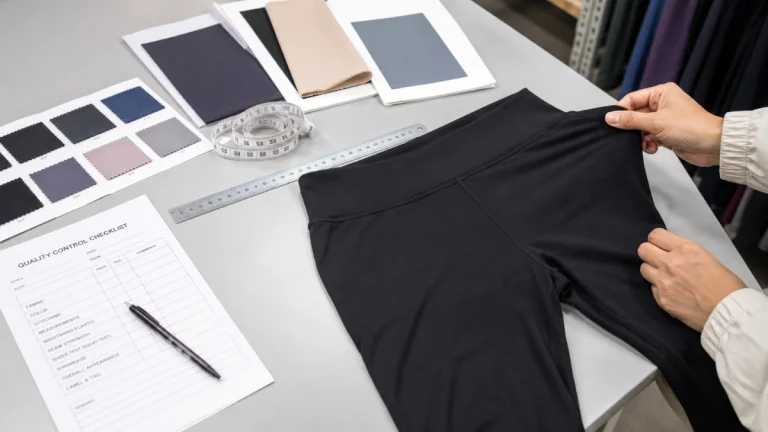
Match the samples to the current development record:
- style number and sample revision;
- approved base-size sample;
- current graded measurement chart;
- current points of measure;
- fabric and fit-sensitive components;
- pattern or grading revision used for the submitted sizes.
The physical samples and the specification need to describe the same product.
This matters even more with fitted activewear. If the size set uses a fabric with meaningfully different stretch, recovery or structure from the intended bulk material, it can still help with an early grading review, but it should not be treated as final proof of the finished fit.
The same revisions should appear in the activewear tech pack. If the garment and the file disagree, close that gap before approving the range.
Review a Size Set in Four Passes
Start with what you can measure. Then move to proportion and fit. This makes it easier to see whether a problem comes from one sample, the grading progression or the product itself.
1. Measure Each Size Against Its Own Specification
An XS is checked against the XS specification. An XL is checked against the XL specification. Do not compare every garment with the base-size measurements.
Use the agreed point-of-measure method each time. A waistband measured relaxed is not comparable with one measured under tension. A curved rise measured along the seam is not comparable with a straight-line measurement between two points.
Record the target measurement, the actual result and the agreed tolerance. If a sample misses the target, keep that result visible instead of averaging several sizes together.
2. Compare the Grade Between Sizes
Next, stop looking at each garment alone.
Compare how the important measurements change from one sampled size to the next. A grade rule is the planned size-to-size change at a measurement or pattern point.
Waist, hip, rise, body length, armhole, underband and other areas do not have to change by the same amount. They perform different jobs. What matters is whether the physical samples follow the grading progression approved for that product.
This check can expose something that an individual tolerance check misses. Several garments may each sit inside their allowed measurement range while the progression between neighbouring sizes is still uneven.
3. Check Whether the Design Still Holds Together
A correct size range is not created by making every part proportionally larger or smaller.
Stand neighbouring sizes together and compare the silhouette. Look at waistband depth, rise balance, panel lines, pocket position, neckline, straps, armholes, hem shape and the details that define the style.
A larger size should still look like the product you approved in the base size.
Pay particular attention to details whose position matters as much as their measurement. A side pocket can move too low after grading. A fixed-size logo can look differently positioned as the panel around it changes. A sports-bra neckline can meet the written measurement while no longer giving the coverage you approved.
4. Check Fit and Movement on the Sampled Sizes
Flat measurements confirm the garment dimensions. They do not fully confirm how fitted activewear behaves on a person.
Fit each sample on someone whose body measurements fall within that size, then use movements that match the product.
For leggings or fitted shorts, check the waistband, rise, hip, thigh and leg opening while the wearer bends, squats and lunges. Watch for back-waist gapping, waistband rolling, crotch pulling, excessive pressure or panels moving out of position.
For sports bras and built-in-bra tops, check the underband, neckline, armhole, straps and coverage during arm raises and normal upper-body movement.
For fitted tanks and training tops, review the chest, armhole, shoulder or strap position, body length and hem as the wearer reaches and moves.
The sizes do not need to feel identical. They do need to preserve the intended fit, coverage and function of the product.
What to Check by Activewear Product Type
Leggings and Fitted Bottoms
Review the waist, hip, thigh, front and back rise, inseam and leg opening as a connected system. If the garment has a shaped waistband, gusset, side pocket or contour seam, check whether those features remain positioned correctly as the size changes.
If a larger legging slides down, do not tighten the waistband first. Check the rise, hip fit, fabric behavior and overall garment tension before deciding what needs to change.
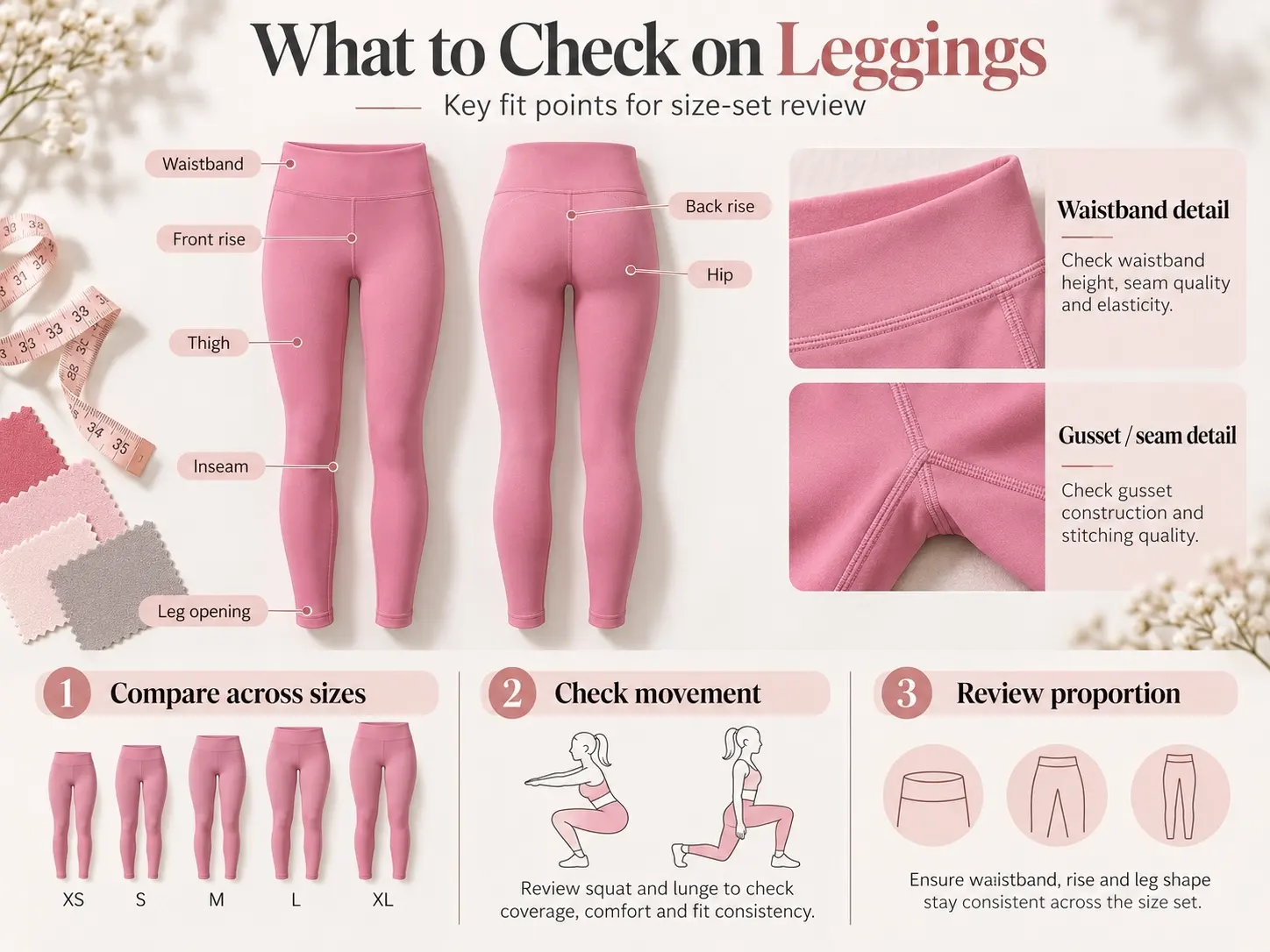 For leggings, review measurements and proportions together with waistband stability, rise balance, movement and overall fit across sizes.
Sports Bras and Built-In-Bra Tops
Look beyond the underband measurement. Compare neckline and armhole coverage, strap position, body length, lining and pad or cup placement where those components are used.
A bra can get wider on paper while losing the neckline coverage or strap position you approved in the base size.
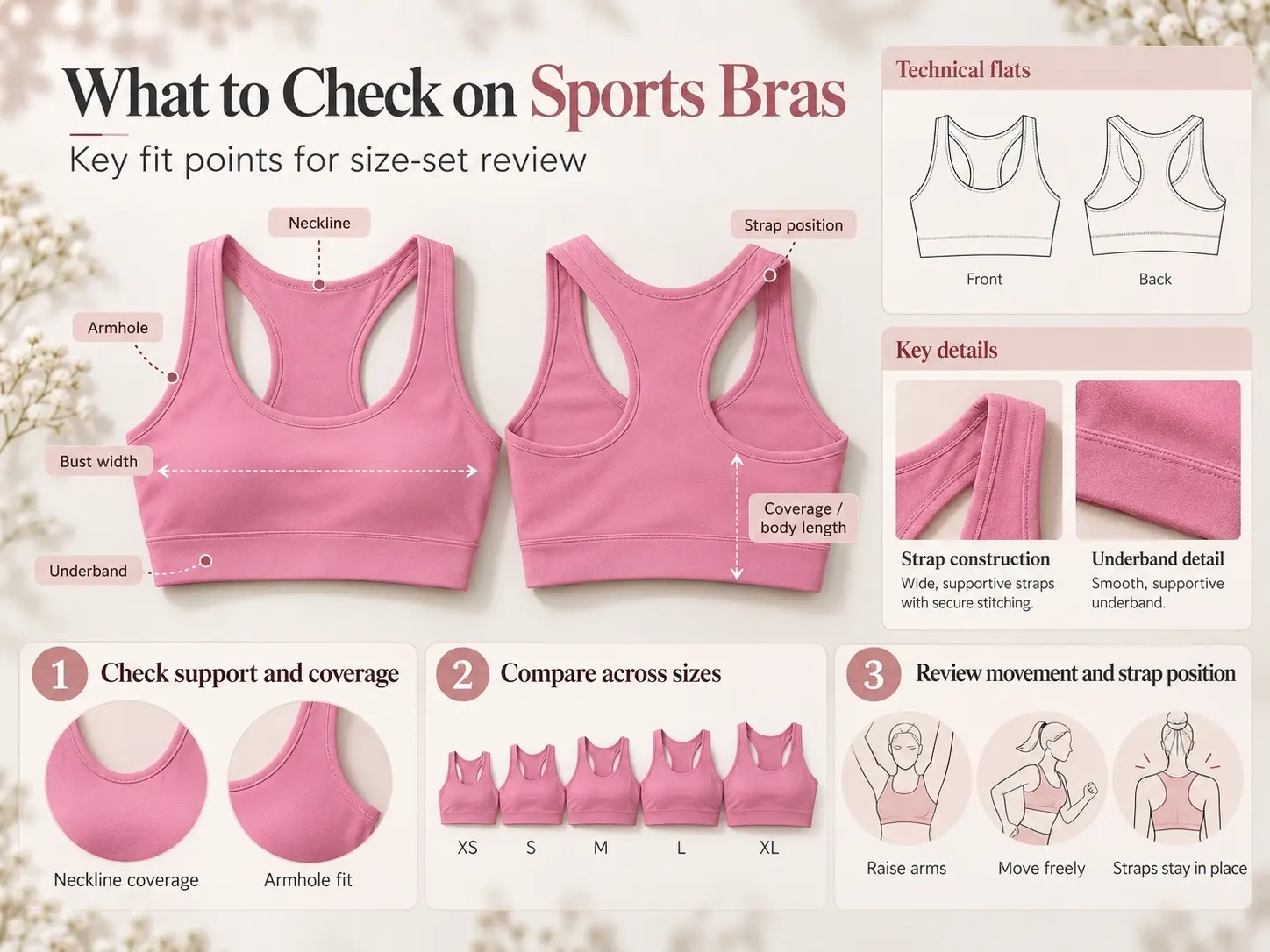 For sports bras, compare neckline, armhole, underband, strap position and coverage across the size range, then review the fit in movement.
Fitted Shorts and Running Styles
Review the waist, hip, rise, thigh and leg opening together. For a lined or 2-in-1 short, check the balance between the outer shell and inner layer as the sizes change.
Pockets, side splits and liner openings should also stay in usable positions. Those details are easy to miss when the review focuses only on waist and hip measurements.
If One Size Fails, Diagnose It Before Changing the Grade
“The grading is wrong” is not enough information to revise a pattern.
Look at the pattern of the failure first.
| What You See | Check First | What It May Tell You |
|---|---|---|
| The same problem appears in the base size and other sampled sizes. | Base pattern, specification, fabric or construction. | The problem may already exist in the product being graded rather than being created by the grade. |
| The problem becomes stronger as sizes move farther from the approved base. | Grade progression and size-specific pattern relationships. | The range may not be preserving the intended proportion as it moves away from the base size. |
| One size misses its specification while neighbouring sizes follow the expected progression. | Measurement method, sample workmanship and pattern revision. | An isolated sample problem should be ruled out before changing the whole grade. |
| Measurements pass, but the worn fit or movement is wrong. | Fit intent, grade relationship and material behavior. | A correct flat measurement does not prove that the current specification creates the intended activewear fit. |
| The problem appears after changing fabric, elastic or another fit-sensitive component. | The changed material or component and the sizes affected by it. | The earlier approval belongs to the product configuration that was actually reviewed. |
This step prevents the wrong correction from creating another problem. Tightening every waistband will not fix a back-rise grading issue. Changing the base pattern is unnecessary if one garment was simply sewn or measured incorrectly.
Does a Size Set Need Every Size?
Use broader size-set coverage for a new fitted style, a wide size range, extended sizing, or a fabric-and-pattern combination that has not been proven before.
Selected sizes make more sense for a carryover style when the same pattern block, material behavior, construction and grading system already have a reliable history.
If you review selected sizes, spread them across the range. Checking only M and L tells you little about how an XS–2XL range behaves farther from the base size.
The newer the pattern, the wider the size range and the more fit-sensitive the garment, the more physical cross-size evidence you should require before bulk production.
Write Size-Specific Feedback Before You Approve the Range
When one size fails, describe what happened in that size instead of sending a general comment about the whole range.
Weak: “XL grading is wrong.”
Useful: “XL back waist gaps during forward bending while M and L remain stable. Keep the approved front-waist fit and review the XL back-waist and rise progression. Recheck any connected size affected by the revised grade.”
The second comment tells the pattern team what was observed, where it happened and what result needs to be protected.
Once the correction is accepted, update the affected pattern and graded measurement record. Do not let the final size decision live only in an email or chat while production continues from an older file.
When Is a Size Set Sample Ready for Approval?
Approve the size set when the evidence agrees in five places:
- Version: the samples match the current pattern, measurement chart, fabric and relevant construction.
- Measurements: each submitted size meets its own approved specification within the agreed tolerance.
- Progression: the physical garments follow the intended size-to-size grading.
- Fit and proportion: the product keeps its intended silhouette, coverage and movement across the sizes reviewed.
- Production record: every accepted correction has been transferred into the current specification and the old revision no longer controls production.
If a separate pre-production sample is still required, keep that approval open. Size-set approval confirms the size range you reviewed; it does not silently approve unrelated fabric, trim, branding or packaging decisions.
Approve One Current Size Standard Before Bulk
Close grading problems while you are still working with a small number of physical samples, before the same issue is repeated through a bulk order.
Start with one approved base-size reference. Grade from that current version. Review each sample in two directions: against its own specification and against the rest of the size range.
Then check the product on body through the movement it was designed for.
When the measurements, progression, fit and current production file all agree, the brand and factory have something concrete to reproduce in bulk: not just a size chart, but a size range that has been physically reviewed.
Developing a new activewear size range?
Muzyoga supports OEM/ODM development for leggings, sports bras, yoga wear and other activewear styles. Send your target product, reference style or tech pack, approved base size if available, planned size range, fabric direction, branding requirements and expected quantity through our custom OEM/ODM development service. If the grading or size-set plan is still open, include that information with the project brief.
Frequently Asked Questions About Size Set Samples
Is a size set sample the same as a fit sample?
No. A fit sample establishes the intended fit in the development or base size. A size set sample checks whether that approved product has been graded successfully into other sizes.
How many sizes should be included in a size set?
There is no universal number. Some projects review every production size, while others use selected sizes across the range. New patterns, wider ranges and fit-sensitive products justify broader physical review than an unchanged style with a proven grading history.
Should a size set use the final fabric?
For close-fitting activewear, final fit approval is strongest when the sample uses the intended bulk fabric or a material that represents its fit behavior closely. A substitute fabric can support an earlier grading check, but a major difference in stretch, recovery or structure can change the worn result.
What happens if only one size fails?
Do not change the whole grade automatically. First check the sample measurement, measuring method, pattern revision and workmanship. If those are correct and the problem follows the size progression, review the affected grading relationship and any connected sizes.
Can a size set pass measurements but still fail approval?
Yes. A garment can meet its flat measurement specification while the size-to-size proportion, coverage or worn fit is still wrong. Activewear size-set approval should therefore combine measurement review with product-specific fit and movement checks.
Is size-set approval the same as pre-production approval?
Not automatically. A size set checks the graded size range. A pre-production sample normally confirms the final production package. If one submission is being used for both purposes, define clearly which requirements are being approved.