Squat-Proof Leggings for Activewear Brands: Fabric, Fit & Sample Testing Checklist
A leggings sample can look perfect on the table: soft hand feel, clean stitching, deep black color, and a smooth high-waist fit. The problem often appears later, when the fabric is stretched during a squat, lunge, yoga pose, or gym workout.
For activewear brands, that is where squat proof leggings become more than a consumer buzzword. Opacity affects product reviews, return risk, size grading, fabric selection, and whether a sample is ready for bulk production.
This guide is written for private label activewear brands, sourcing teams, and startup fitness labels that need a practical way to review leggings before placing a production order. Instead of treating “squat-proof” as a marketing claim, we will break it down into sample testing, fabric opacity, stretch recovery, waistband stability, fit construction, and bulk approval checkpoints.
Buyer takeaway: Squat-proof leggings are not defined by one fabric blend or one GSM number. Brands should check how the fabric performs under stretch, movement, lighting, washing, and size grading before approving bulk production.
If you are still comparing suppliers, you can also read our guide on how to choose a fitness clothing manufacturer for activewear brands.
How to Check If Leggings Are Squat-Proof?
To check if leggings are squat-proof, wear the sample under bright natural or studio-style lighting, perform a deep squat, lunge, and forward bend, then check the glute, thigh, knee, crotch, and back-rise areas for visible skin, underwear lines, or fabric transparency.
For activewear brands, this test should not be done on only one sample or one body size. It should be repeated across multiple sizes, colors, and sample versions before bulk production. Light colors, printed fabrics, larger sizes, and high-stretch zones often reveal opacity problems more easily than dark flat-lay samples.
Brand-side rule: Do not approve leggings only because they look opaque on a table. Review them under stretch, movement, lighting, washing, and size grading conditions.
What Does Squat-Proof Mean in Leggings?
In activewear manufacturing, squat-proof means the fabric remains acceptably opaque when stretched over high-tension areas such as the hips, glutes, thighs, and knees during movement. It does not mean the fabric is guaranteed to be fully non-transparent in every size, color, lighting condition, and stretch ratio.
A more accurate definition is:
Squat-proof leggings are leggings that have been designed and sample-tested to maintain practical opacity during real movement, especially when stretched during squats, lunges, deadlifts, Pilates movements, and yoga poses.
This matters because many new brand owners assume that heavier GSM automatically means better opacity. That is only partly true. A legging can feel thick but still turn sheer if the knit density is loose, the elastane core reflects light, the color is too light, or the garment is stretched beyond the intended fit range.
For sourcing teams, the better question is not simply “What GSM should I use?” The better question is: Does this fabric, construction, color, and size grading pass a controlled leggings squat test before bulk production?
Why Opacity Issues Matter for Activewear Brands
For a consumer, a see-through legging is embarrassing. For a brand, it can create a chain of commercial risks:
- Negative reviews: Customers often mention see-through fabric, roll-down waistbands, poor compression, or pilling in reviews and social posts.
- Higher return rates: Leggings that fail opacity or fit expectations are more likely to be returned as “not as described.”
- Lower repeat purchases: If the first legging feels risky or uncomfortable, the customer is less likely to buy matching sports bras, sets, or restocks.
- Brand trust loss: For premium activewear brands, opacity and fit are basic quality expectations, not luxury features.
Consumer Squat Test vs. B2B Sample Approval
Most consumer articles explain how a shopper can check leggings after buying them. Activewear brands need a stricter process because the decision happens before bulk production.
| Consumer Squat Test | B2B Brand Sample Approval |
|---|---|
| Tests one purchased pair at home | Tests multiple samples before bulk production |
| Checks in a mirror or under natural light | Checks under controlled bright lighting and repeatable review conditions |
| Usually one body size | Reviews S/M/L or full size set when possible |
| Focuses on personal comfort and opacity | Focuses on opacity, recovery, waistband stability, seam tension, and return risk |
| No formal record required | Records photos, videos, supplier notes, measurements, and QC checkpoints |
| No production decision involved | Decides whether the sample is ready for bulk production or needs revision |
This is why private label leggings should not be approved through a simple visual check. A B2B sample approval process needs movement testing, fabric review, size checking, and production consistency control.
How to Run a Leggings Squat and Lunge Test During Sample Review
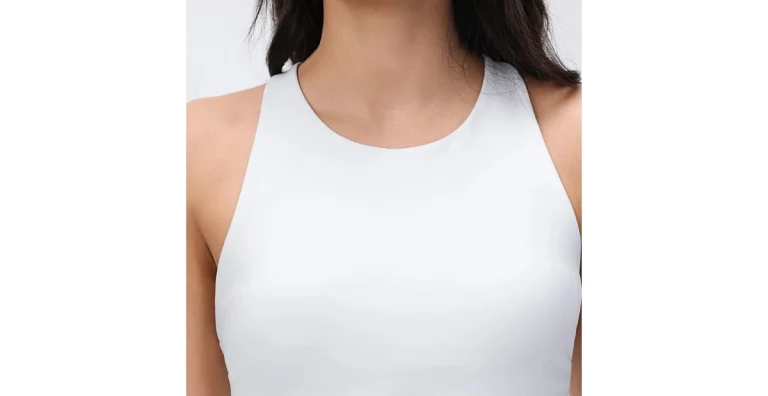
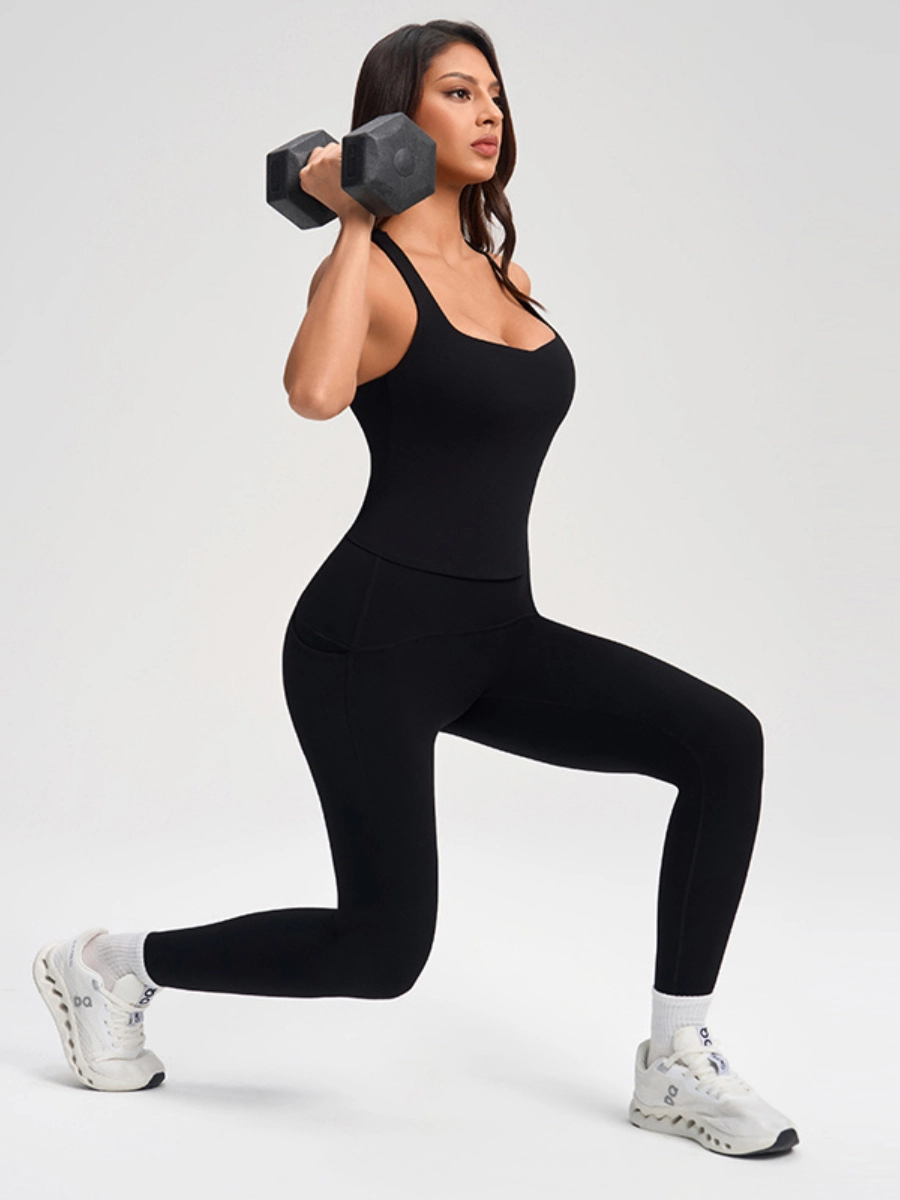 Movement-based sample testing helps activewear brands review leggings opacity, waistband stability, and fit before bulk production.
A leggings squat test is not a replacement for laboratory testing, but it is a practical sample-stage review method. It helps brands catch visible opacity, fit, and tension issues before approving bulk production.
1. Test Under Controlled Bright Lighting
Factory room lighting can make fabric look safer than it is. During sample review, test leggings under bright overhead lighting that simulates a gym, yoga studio, retail changing room, or photo shoot environment. The exact lighting level can be set as an internal reference, but the key is consistency: use the same lighting condition when comparing fabrics, colors, and sample versions.
2. Use Multiple Sizes, Not One Model Size
Fabric tension changes across the size range. A legging that looks opaque on size S may turn sheer on size L or XL if the grading, rise, or waistband construction is not balanced. For private label leggings, review at least small, medium, and large samples when the target market includes multiple body types.
3. Check High-Tension Zones
Opacity issues usually appear first in areas where the fabric stretches most:
- Glute area during a deep squat
- Upper thigh during lunges
- Back rise and lower-back seam during bending
- Knee area after repeated movement
- Crotch and gusset area during yoga or Pilates movements
- Side seams and pocket panels if the design includes pockets
4. Use a Contrast Baseline
For a simple internal review, test light and dark leggings over a high-contrast background or undergarment. If outlines, text, patterns, or skin tone become clearly visible during stretch, the fabric or size specification may need adjustment.
5. Repeat After Washing
Do not test only the brand-new sample. Wash the sample several times according to the care label, then repeat the squat and lunge test. Fabric surface, recovery, hand feel, color, and tension can change after laundering.
Buyer note: Treat the squat test as a practical sample review method, not as a universal official standard. If your brand needs documented evidence for retail buyers, request third-party textile tests for stretch recovery, pilling resistance, colorfastness, and other measurable performance claims.
Fabric Factors: Opacity, GSM, Knit Density and Stretch Recovery
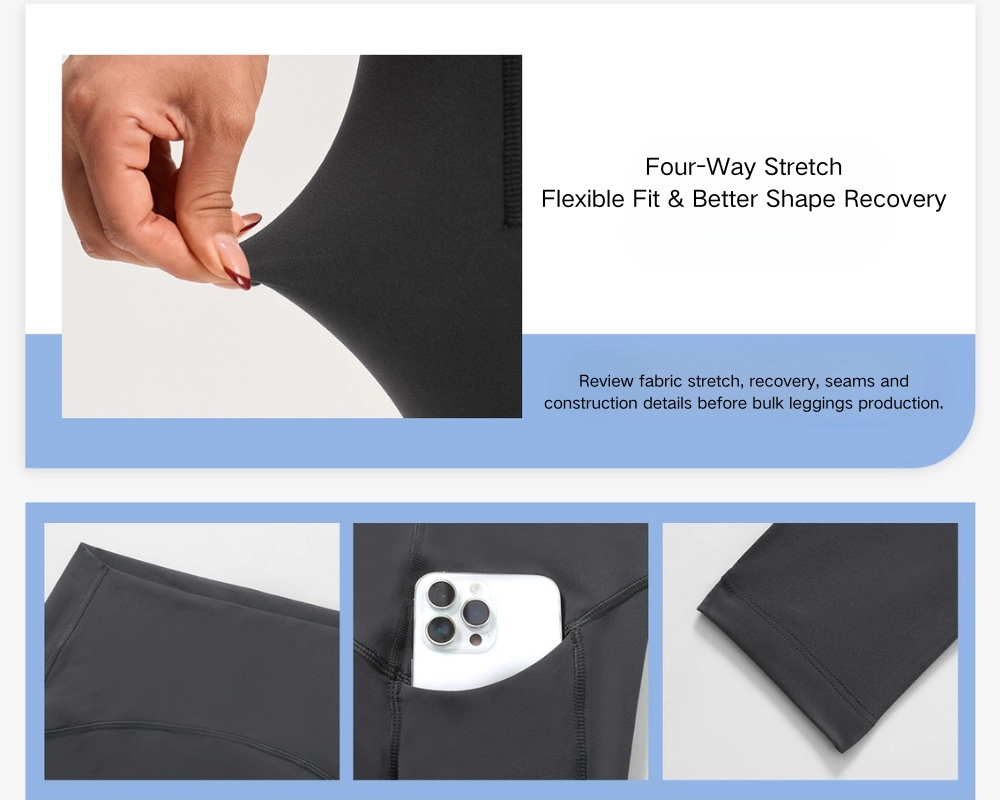 Fabric is the first layer of squat-proof performance, but no single fabric number can guarantee the result. Brands should review several factors together.
| Fabric Factor | What to Check | Why It Matters for Squat-Proof Leggings |
|---|---|---|
| GSM | Fabric weight per square meter | Higher GSM may improve coverage, but it does not guarantee opacity if knit density or recovery is poor. |
| Knit density | How tightly the fabric is constructed | Dense constructions often reduce light pass-through during stretch. |
| Fiber blend | Nylon/spandex, polyester/spandex, recycled blends, brushed fabrics | Different blends affect hand feel, recovery, compression, opacity, drying, and cost. |
| Stretch recovery | Whether fabric returns after being stretched | Poor recovery can cause bagging at the knees, seat, or waistband after wear. |
| Color depth | Black, navy, light grey, white, pastel, printed colors | Light colors and stretched prints often reveal transparency more easily than dark solids. |
| Surface finish | Brushed, matte, ribbed, seamless, slick, peach-skin | Finish affects opacity perception, pilling risk, hand feel, and market positioning. |
Is Nylon-Spandex Better Than Polyester-Spandex?
Nylon-spandex blends are widely used in premium yoga leggings because they can provide a soft hand feel, strong stretch, and comfortable body-hugging fit. Polyester-spandex blends can be useful for printed leggings, cost-sensitive collections, or performance styles where quick-dry and durability are priorities.
The right choice depends on your target market. A boutique yoga brand may prefer a soft nylon-spandex hand feel. A gym-focused brand may prioritize compression, recovery, and durability. A sustainable activewear brand may compare recycled nylon, recycled polyester, lyocell blends, or other eco-focused options. You can also read our related article on bio-based nylon and lyocell for hot yoga brands.
Why GSM Is Not Enough
Many buyers ask for a “squat-proof GSM.” This is understandable, but incomplete. A 220 GSM fabric can perform well if the knit structure, yarn quality, color, and pattern tension are correct. A heavier fabric can still fail if it stretches too far, recovers poorly, or becomes sheer across high-tension zones.
For private label leggings, use GSM as one data point. Do not use it as the only approval rule.
The Muzyoga O-Fit Review Model
To avoid over-relying on one number, activewear brands can use a simple decision model during sample approval: O-Fit.
| O-Fit Element | Meaning | Buyer Question |
|---|---|---|
| O — Opacity | How the legging performs under stretch and lighting | Does the fabric stay acceptably opaque during squats and lunges? |
| F — Fit | How the garment sits on different body sizes | Does the waistband stay stable without over-stretching the hip area? |
| I — Integrity | How seams, gusset, pockets, and panels handle tension | Do seams or design lines create extra pressure or visibility issues? |
| T — Testing | How the sample is checked before bulk production | Has the sample been reviewed for opacity, recovery, pilling, colorfastness, and size grading? |
This model helps sourcing teams compare leggings more accurately than asking only for “thick fabric” or “high GSM.”
Fit Factors: Waistband, Rise, Seam Placement and Size Grading
Squat-proof performance is not only a fabric issue. Fit and construction can create or reduce transparency risk.
Waistband Stability
If the waistband rolls down or slips during movement, the wearer may pull the leggings upward repeatedly. This can over-stretch the fabric across the hips and glutes, making opacity problems more visible. For high-waisted leggings, test whether the waistband stays stable during squats, lunges, jumping jacks, and forward bends.
Rise Height
Low-rise and mid-rise leggings can create different tension points from high-waisted leggings. A high-rise design may improve coverage for yoga and gym training, but only if the waistband height, compression level, and pattern balance are correct.
Front Seam and Gusset Design
Seam placement affects both comfort and appearance. Poor front seam design can create discomfort or visible lines. A well-planned gusset can improve movement comfort and reduce tension at the crotch area, especially for yoga, Pilates, and deep squats.
Size Grading
Simply scaling a size S pattern upward does not always work. Larger sizes may need adjusted rise, waistband tension, hip width, and fabric recovery expectations. If a brand sells plus sizes or extended sizes, sample review should include those sizes before bulk production.
Squat-Proof Yoga Pants vs Workout Leggings vs Gym Leggings
Different product names create different customer expectations. Brands should align fabric, construction, and marketing language with the real use case.
| Product Type | Typical Use | Main Quality Risk | Sample Review Focus |
|---|---|---|---|
| Squat proof yoga pants | Yoga, Pilates, barre, studio training | See-through fabric during bending and stretching | Opacity, comfort, waist stability, seam softness |
| Squat proof workout leggings | Multi-sport training, gym, fitness classes | Poor recovery, sweat visibility, waistband movement | Stretch recovery, moisture management, compression balance |
| Squat proof gym leggings | Weightlifting, HIIT, strength training | High glute and thigh tension during deep squats | Deep squat opacity, seam strength, high-tension fit zones |
| Seamless leggings | Body-contouring, fashion fitness, gym sets | Uneven compression or density across zones | Zone density, stretch balance, size trial, glute opacity |
Muzyoga offers women’s and men’s activewear categories, including women’s activewear, women’s bottoms, sports bras, workout leggings, wide-leg pants, shorts, men’s tights, and training pants for private label and wholesale buyers.
Muzyoga Sample-to-Bulk Gate for Squat-Proof Leggings
A common sourcing mistake is moving from one attractive sample directly into bulk production. For squat-proof leggings, brands should use a staged approval process. This reduces the risk of approving a fabric that looks good in one condition but fails after grading, washing, or bulk fabric changes.
| Gate | What to Approve | Do Not Move Forward If |
|---|---|---|
| Gate 1: Fabric Swatch | Hand feel, stretch, color, recovery, and opacity under stretch | The fabric becomes visibly sheer when stretched by hand or under bright light. |
| Gate 2: First Sample | Fit, waistband, rise, gusset, seam placement, and movement comfort | The waistband rolls, the crotch pulls, or the glute area becomes transparent during movement. |
| Gate 3: Size Set | S/M/L or full size grading, depending on the order plan | Larger sizes fail opacity, rise balance, waistband stability, or recovery checks. |
| Gate 4: Wash Review | Recovery, pilling, colorfastness, shrinkage, and hand feel after washing | The fabric bags, fades, pills, loses recovery, or feels significantly different after washing. |
| Gate 5: Bulk Approval | Bulk fabric lot, shade consistency, measurements, stitching, and packaging | Bulk fabric, fit, color, or measurements differ from the approved sample beyond agreed tolerance. |
This gate system is especially useful for startup brands, because early product quality problems can be expensive to fix after inventory has already been produced.
Sample Approval Checklist for Private Label Leggings
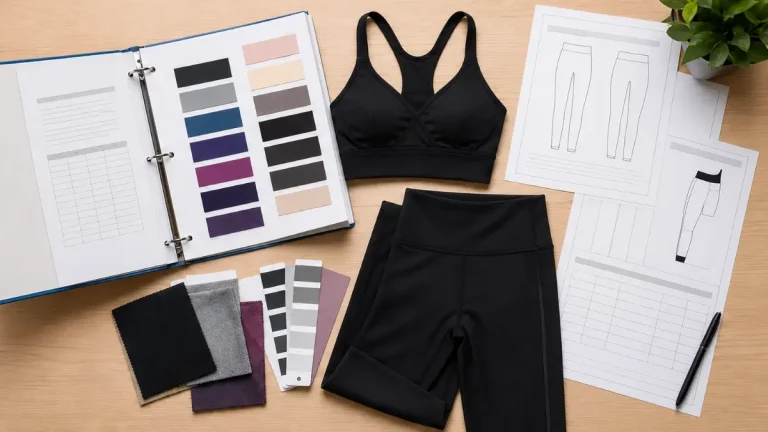
Before approving bulk production, use a structured review checklist. This helps reduce the risk of approving a sample based on appearance alone.
| Inspection Item | Sample Review Method | Evidence Level | Brand Risk Reduced |
|---|---|---|---|
| Opacity | Deep squat, lunge, and bend test under controlled bright lighting | Internal sample review | See-through complaints and negative reviews |
| GSM and density | Compare fabric weight, thickness, and stretch visibility across colors | Supplier data + sample review | Bulk fabric mismatch and poor coverage |
| Stretch recovery | Review recovery after repeated stretching or request test data for knitted fabric stretch and growth | Can be supported by ASTM D2594/D2594M-21 when applicable | Bagging knees, loose seat, poor shape retention |
| Waistband stability | Fit model performs squats, lunges, jumping jacks, and forward bends | Internal fit review | Roll-down, slipping, and fit complaints |
| Pilling resistance | Review inner-thigh, seat, and high-friction zones after wear simulation or request lab testing | Can be supported by ISO 12945 pilling methods when applicable | Early surface wear and low perceived quality |
| Colorfastness | Check rubbing, perspiration, and laundering behavior, especially for dark colors | Can be supported by AATCC colorfastness methods such as TM8 and TM61 when applicable | Dye transfer, fading, staining, and customer complaints |
| Size grading | Review S/M/L or extended sizes before bulk approval | Fit model review + pattern check | Opacity failure in larger sizes and inconsistent fit |
| Bulk consistency | Confirm bulk fabric lot, color, hand feel, and measurement tolerance match the approved sample | Pre-shipment inspection | Sample approved but bulk shipment feels different |
If you are planning a low MOQ activewear launch, connect this checklist with your product planning. Smaller first orders can reduce inventory risk, but only if the sample quality is reviewed carefully. Read our related guide on low MOQ activewear manufacturing for startup fitness brands.
Evidence Notes: Which Tests Can Support Leggings Quality Claims?
Not every quality claim should be treated the same. Some checks are practical internal sample reviews, while others can be supported by recognized textile test methods.
| Quality Area | Useful Evidence Source | How Brands Should Use It |
|---|---|---|
| Stretch and growth | ASTM D2594/D2594M-21 | Use when you need measurable data for knitted fabric stretch and growth behavior. |
| Pilling, fuzzing, matting | ISO 12945-1:2020 | Use when you need a lab-supported way to evaluate surface pilling resistance. |
| Color transfer by rubbing | AATCC TM8 | Useful for dark colors, high-sweat use, and fabrics that may rub against skin or light garments. |
| Colorfastness to laundering | AATCC TM61 | Useful when checking whether color changes or staining may appear after repeated washing. |
| Squat-proof opacity | Controlled internal squat and lunge test + sample review | Useful for visual approval, but do not present it as a universal official standard unless a specific lab method is agreed with the buyer. |
The most reliable sourcing process combines both: practical movement-based sample review and measurable textile tests when the claim needs to be documented for retail buyers, marketplaces, or premium brand positioning.
How Muzyoga Helps Brands Develop Private Label Leggings
Muzyoga supports activewear startups, boutique fitness brands, yoga studios, and private label buyers developing leggings, sports bras, yoga sets, gym tops, shorts, jackets, seamless activewear, and athleisure apparel.
For leggings projects, our support can include:
- Fabric option review based on target hand feel, compression, recovery, and price position
- Private label sample development for workout leggings, yoga pants, gym leggings, and matching sets
- Custom logo, label, color, and packaging support
- Sample-stage review for opacity, stretch recovery, waistband stability, pilling risk, and color consistency
- Low MOQ support depending on fabric availability, customization method, size range, and order details
- Bulk production coordination and quality inspection before shipment
Need Help Developing Squat-Proof Leggings?
If you are planning private label leggings, yoga pants, gym leggings, or a matching activewear set, send us your target style, fabric requirement, tech pack, reference photo, or sample idea. Our team can help you review fabric direction, sample feasibility, MOQ options, and quality checkpoints before bulk production.
FAQ: Squat-Proof Leggings for Activewear Brands
How do you check if leggings are squat-proof?
To check if leggings are squat-proof, wear the sample under bright natural or studio-style lighting, perform a deep squat, lunge, and forward bend, then review the glute, thigh, knee, crotch, and back-rise areas for transparency or visible underwear lines. For brands, this should be repeated across multiple sizes and colors before bulk approval.
What does squat-proof mean in leggings?
Squat-proof means the leggings are designed and tested to stay acceptably opaque when stretched during movements such as squats, lunges, yoga poses, and bending. For brands, this should be checked during sample review before bulk production.
What material is squat-proof?
No material is automatically squat-proof in every condition. Nylon-spandex and polyester-spandex blends can both work, but the final result depends on knit density, GSM, color, stretch ratio, recovery, pattern tension, and size grading.
Are thicker leggings always more squat-proof?
No. GSM matters, but thickness alone is not enough. Opacity also depends on knit density, yarn quality, color, stretch ratio, recovery, pattern tension, and size grading.
Are seamless leggings squat-proof?
Seamless leggings can be squat-proof, but they must be reviewed carefully. Density zones, compression, size grading, and glute-area stretch can affect opacity. Seamless construction should not be approved without movement testing.
Can startup brands make private label squat-proof leggings with low MOQ?
Yes, startup brands can develop private label leggings with low MOQ options, but MOQ depends on fabric availability, color customization, size range, branding method, and design complexity. The safer approach is to approve fabric swatches and samples before committing to bulk production.
Final Takeaway
Squat-proof leggings are not defined by one magic GSM or one fabric blend. For activewear brands, the safer development process is to review opacity, fit, waistband stability, stretch recovery, pilling resistance, colorfastness, and size grading together.
If your brand is developing private label leggings, workout leggings, yoga pants, or matching activewear sets, use the sample checklist above before approving bulk production. A structured review process can help reduce see-through complaints, return risk, and product launch uncertainty.
For fabric selection, sampling, private label branding, or low MOQ production support, contact Muzyoga to discuss your custom activewear project.