Seamless Activewear Manufacturing Process: From Yarn to Finished Garment
The seamless activewear manufacturing process does not begin with a knitting machine. It begins with a product decision: how should the garment feel, where should it hold, and what kind of movement must it handle?
That distinction matters because a soft yoga legging and a firmer gym tight can share almost the same outline. Once the body starts moving, however, they ask very different things from the yarn, waistband and knit structure.
From there, development moves through yarn selection, digital programming, circular knitting, finishing and fit approval. The production steps are technical, but the buying question is straightforward: can the factory turn the original idea into a garment that works on the body?
What Does Seamless Actually Mean in Activewear?
Traditional cut-and-sew activewear begins with finished fabric. Pattern pieces are cut from the fabric roll and stitched together to create leggings, sports bras, tops or shorts.
Seamless knitting technology changes that order. The machine builds a tubular garment body directly from yarn. A legging waistband or sports-bra underband may already be part of the structure when the piece comes off the machine.
Beyond that, the same garment can contain several knit structures. The waistband may be firmer, the knee area more open, and the hip section more textured. Those changes are created during knitting rather than by sewing separate fabric panels together.
These features are documented in a 2022 peer-reviewed paper on seamless circular knitting. The paper also makes an important point: seamless garments may still need cutting and sewing before they are finished.
In practice, “seamless” usually means fewer traditional joining seams. A pair of leggings may still need a crotch or gusset join. A sports bra may still include straps, bindings, removable pads or sewn labels.
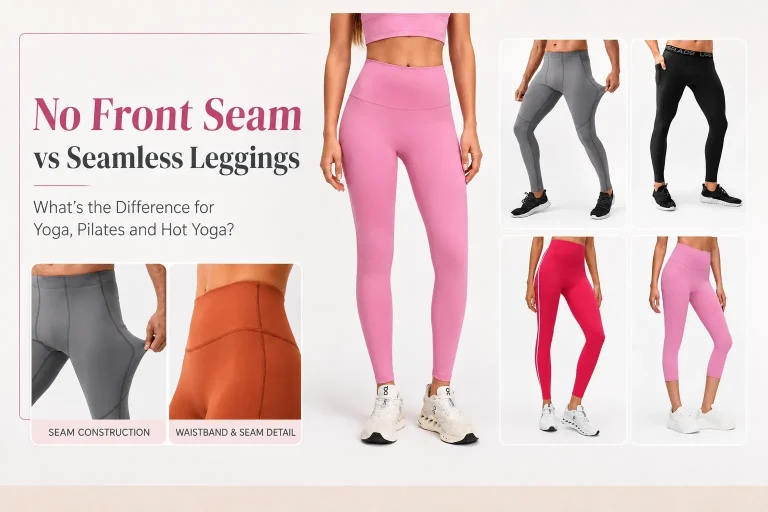
One distinction prevents a lot of confusion: no front seam describes the front construction of leggings, while seamless describes the broader manufacturing method. A no-front-seam legging can still be cut and sewn. A seamless legging can still contain finishing seams. See our detailed comparison of no front seam vs seamless leggings.
How the Seamless Activewear Manufacturing Process Works
There is no single program that works for every garment. A basic ribbed legging is easier to develop than a matching set with several mesh, contour and support areas.
Even so, most seamless activewear manufacturing projects follow the same general route.
The Product Brief Comes Before the Knit Program
Start with the use case. A yoga legging designed for long studio sessions may need a softer surface and moderate hold. A gym legging intended for squats and strength training may need firmer recovery and a more stable waistband.
The target customer matters just as much as the activity. A style developed for light Pilates should not feel like a compression garment simply because both products use seamless construction.
Before the first sample, give the factory a clear direction for:
- the garment type and target activity;
- the intended fit and support level;
- the waistband or underband height;
- the position of rib, mesh and contour details;
- the size range and garment length;
- the colors, logo, labels and packaging.
You do not need to tell the factory which stitch to program. What helps is a clear description of the activity, fit, size range and areas that need more hold or flexibility. The technician can then translate those requirements into yarn and knit choices.
More importantly, avoid relying on broad words such as “premium,” “supportive” or “breathable.” For one brand, support may mean a waistband that stays flat during yoga. For another, it may mean a firmer sports-bra underband. Specific expectations make the first sample much easier to judge.
Yarn and Knit Structure Have to Be Tested Together
Fiber content is only the starting point. Two leggings labelled 80% nylon and 20% elastane can feel completely different once the yarns are knitted into different structures.
The problem is that product listings often reduce material decisions to a percentage. That percentage does not tell you how the waistband will recover, how far the fabric will open under stretch, or whether the surface will feel soft enough for the intended customer.
Yarn choice, elastic setup and knit structure need to be developed together. A softer yarn may improve the hand feel but change the hold. A denser structure may improve coverage but make the garment feel firmer than the brand intended.
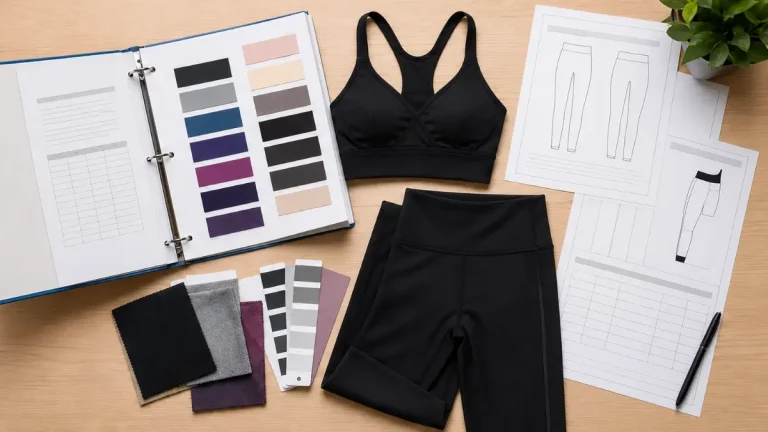
A specification sheet tells you what material was ordered. The first knitted sample shows what the buyer actually needs to know:
- Does the waistband return after it is stretched?
- Does the surface feel right for yoga, training or lounge use?
- Does the garment stay covered across the seat?
- Does the knit feel supportive without becoming restrictive?
- Do the texture and color suit the intended price position?
For that reason, do not approve the yarn and the knit pattern as separate decisions. If either one changes, review the finished garment again.
The Knit Program Places Each Zone on the Body
The knit program is where the garment begins to look like itself. A technician maps the waistband, mesh, rib, texture and contour areas into a digital file that controls the knitting process.
This is how one seamless garment can include:
- a wide ribbed waistband;
- a firmer sports-bra underband;
- open-knit areas behind the knee or under the arm;
- contour patterns around the hips and thighs;
- knitted graphics or brand details;
- different structures for movement and hold.
These details are formed in the knit. They are not printed onto the surface afterward.
The real challenge is not creating a visible pattern. It is keeping that pattern in the right place once the garment stretches around the body.
A contour line may look balanced on a flat sample and move too high when worn. An open-knit panel may provide more flexibility, yet it can also become too sheer if it sits in a high-tension area.
More importantly, the border between two structures must behave smoothly. If a firm section changes too suddenly into an open section, the fabric may ripple, pull or sit unevenly.
What buyers often miss is that a small-looking structural change may require another knit trial. Changing a heat-transfer logo is relatively direct. Moving a waistband, mesh panel or contour zone is not.
The Machine Builds a Near-Shaped Garment Body
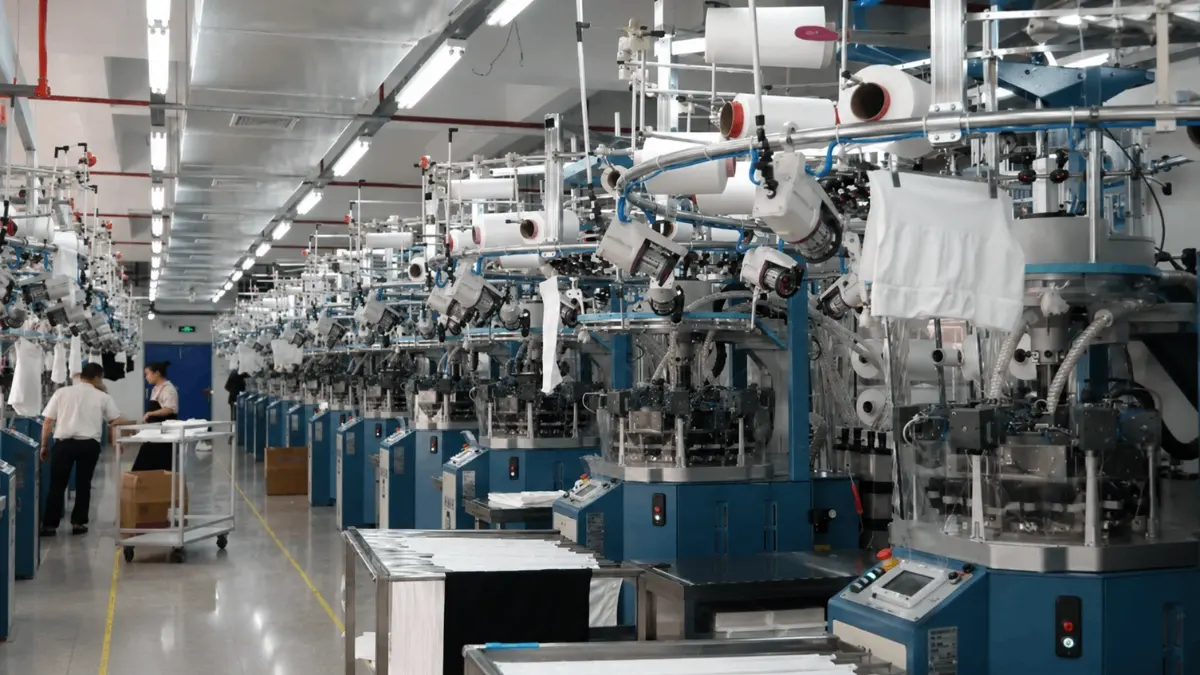
Once the yarn and program are ready, the machine knits the garment in a continuous tube. The waistband, underband, textures and mapped zones may already be visible when the piece comes off the machine.
The real advantage is not simply having fewer seams. It is the ability to change the knit from one part of the body to another without cutting several separate panels.
That sounds close to a finished garment, but there is still work to do.
Depending on the style, the next stages may include color processing, washing, heat setting, shaping, cutting an opening, joining a gusset, attaching straps, inserting pads or adding labels.
This is where finished measurements become important. The dimensions of the first knitted tube may change after the normal finishing route. Measurements taken too early can give the brand a misleading fit reference.
Before approving the sample, confirm that it represents the intended production method. A temporary yarn, unfinished piece or substitute color can help during development, but it should not quietly become the bulk standard.
The Sample Has to Prove Itself on the Body
A flat garment can hide most of the problems that lead to poor reviews later. The waistband may roll only after several bends. A mesh panel may look correctly placed on the table and shift once the fabric stretches.
Put the sample on a body and use it for the movement it was designed to support.
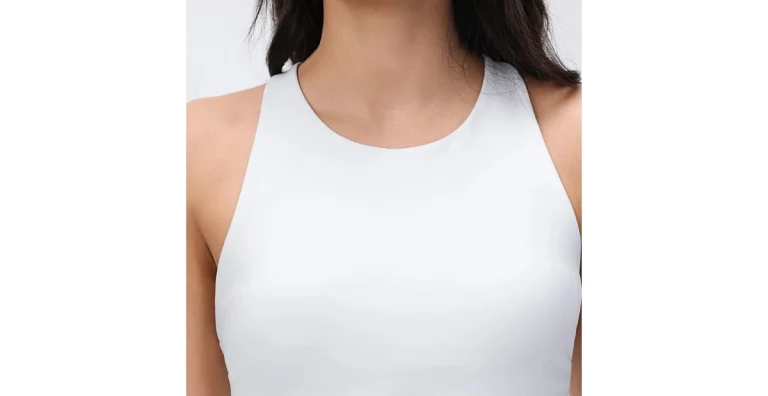
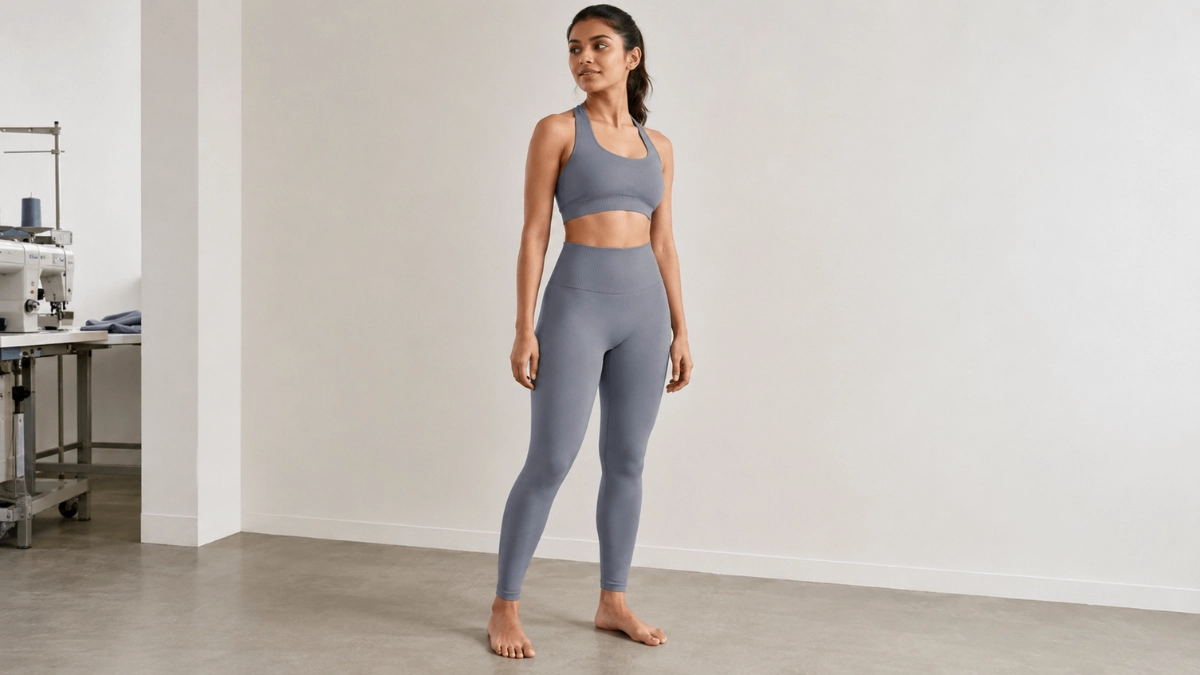 Muzyoga seamless activewear sample reviewed for fit, proportions and knit-zone placement.
For seamless leggings, review:
- waistband hold during squats, bends and lunges;
- the position of hip, thigh, knee and calf zones;
- front, back and crotch comfort;
- opacity across the seat and other high-tension areas;
- shape recovery after repeated movement;
- leg-opening pressure and garment twisting.
For a sports bra, check the underband, neckline, armholes, straps and pad position. A bra that feels comfortable while standing may shift or become restrictive when the wearer raises her arms.
The same review should cover more than one size. Stretch alone should not be used to make one knitted shape fit a wide range of bodies. The waistband, mesh and contour zones still need to sit correctly in smaller and larger sizes.
For a more detailed opacity process, see our squat-proof leggings sample testing guide.
What Knit Zones Can—and Cannot—Do
Rib, mesh and contour areas give seamless activewear its recognizable appearance. They can also change how selected areas of the garment stretch, hold or move.
The easy claim is “zoned compression” or “body-mapped ventilation.” The harder question is whether the zone still performs correctly after the fabric has stretched around the wearer.
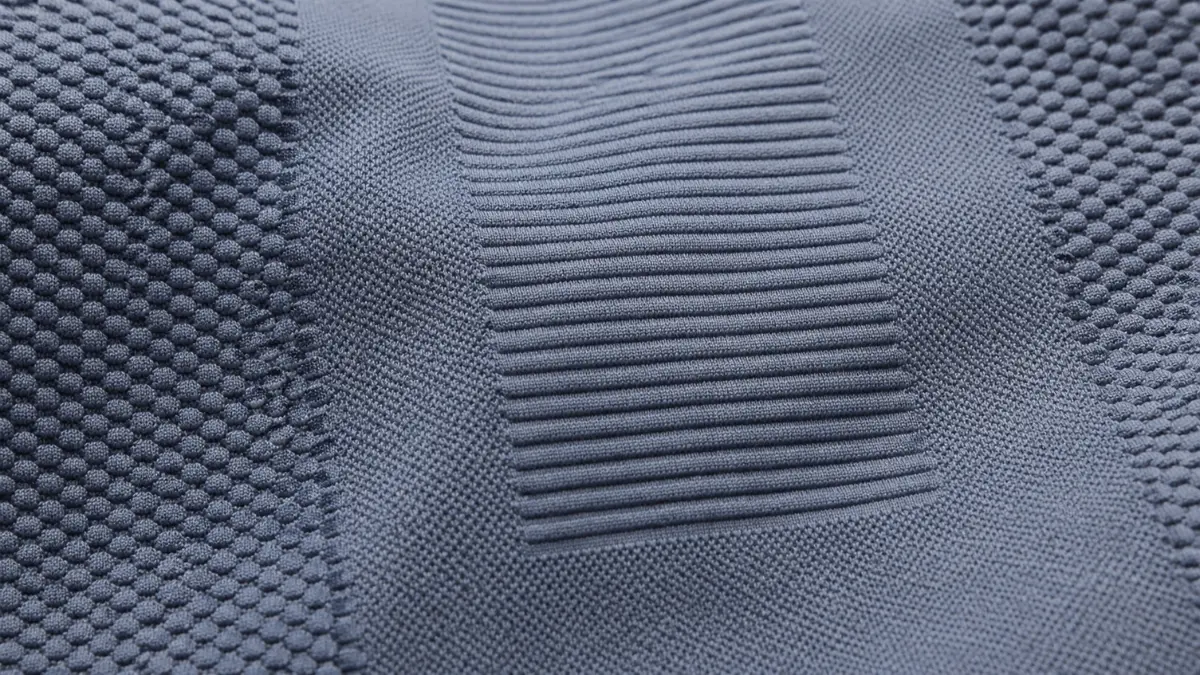 Ribbed, textured and open-knit zones developed for Muzyoga seamless activewear.
A visible knit pattern is not proof of compression, airflow or support. Those words describe an intended function. The finished sample still has to show whether the structure delivers it.
Beyond that, check the same zone across the size range. A contour pattern that frames the hip correctly in size S may sit too high in size L if the grading depends too heavily on stretch.
When Seamless Is—and Is Not—the Right Choice
Seamless knitting works well when a fitted garment can be shaped through yarn and stitch structure. Leggings, sports bras, fitted shorts, crop tops and base layers are common examples.
It is especially useful when the design needs a clean surface, fewer side seams or integrated rib and mesh areas.
Cut-and-sew may be more practical when the product requires:
- large side or cargo pockets;
- several fabric types in one garment;
- zippers or heavy trims;
- strongly shaped panels;
- frequent small design changes;
- a very small first production run.
Look at it another way: seamless construction gives the designer control through yarn and stitches. Cut-and-sew gives the designer control through fabric panels and seams.
Neither route is automatically more professional. A badly planned seamless product is not better than a well-developed cut-and-sew garment.
The right question is not whether seamless is more advanced. It is whether the construction suits the design, order plan and target customer.
What Brands Should Approve Before Bulk Production
Once the fit sample is accepted, the approved details need to move into a clear production standard. A series of messages saying “looks good” is not enough to control a new seamless style.
Before approving bulk production, confirm:
- the final yarn, structure and color;
- the approved measurements for every size;
- waistband or underband hold;
- the position of mesh, rib and contour zones;
- opacity in the relevant sizes and colors;
- remaining seams and finishing details;
- logo, label and packaging placement;
- the signed pre-production sample.
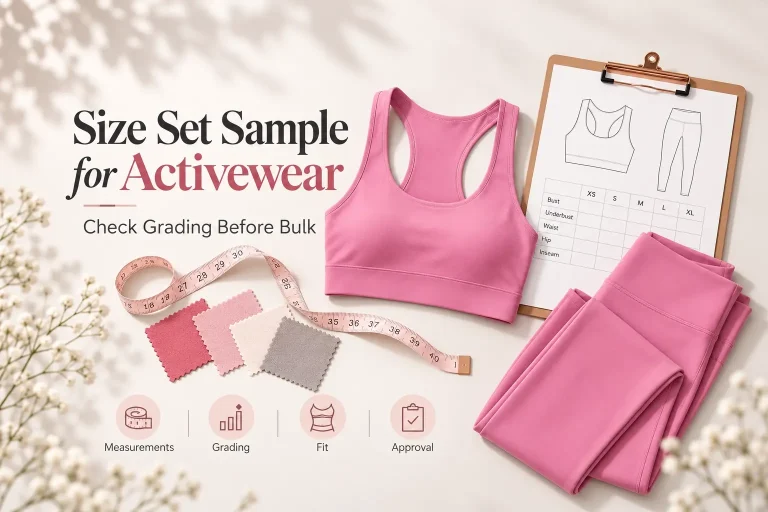
Size development deserves particular attention. Do not approve only the size worn by the fit model. Check whether the waistband, underband and body-mapped zones remain correctly positioned across the planned size range.
Color creates another blind spot. A dark sample should not be treated as proof that a pale color will provide the same visual coverage. Review the colors and sizes that are most likely to expose stretch or opacity problems.
More importantly, compare the production standard with the exact sample that was approved. If the yarn, finishing route or construction changes, record the change and decide whether another sample is needed.
When a retailer requires laboratory testing, agree on the method and pass level before production begins. A test name alone does not tell the factory what result the buyer expects.
Taken together, these checks turn a promising sample into a repeatable product rather than a one-off piece that cannot be matched in bulk.
Frequently Asked Questions
How is seamless activewear made?
Most seamless activewear is made by knitting a tubular garment body directly from yarn. The yarn, stitch structures and body zones are planned first. After knitting, the garment goes through the required finishing, sewing, measurement and fit review.
Are seamless garments completely stitch-free?
Not always. Seamless garments usually contain fewer traditional joining seams, but a product may still need a gusset, strap, binding, neckline finish, label or another sewn component.
How are seamless leggings made?
The factory selects the yarn, maps the waistband and leg zones, creates the digital knit program and produces the tubular legging body. The finished garment is then checked for fit, opacity, recovery and zone placement before bulk production.
Are seamless leggings automatically squat-proof?
No. Seamless describes how the garment is made, not how opaque it will be. Coverage still depends on the yarn, knit structure, color, sizing and how far the fabric stretches on the body.
Can seamless activewear be customized?
Yes. Common options include color, rib patterns, mesh placement, contour details, garment length, logos, labels and packaging. Changing the fit or knit structure usually requires more development than adding branding to an existing style.
Planning a Custom Seamless Activewear Project
A strong seamless product starts with a clear use case, not a fashionable knit pattern. Define the activity, fit, size range and zones that matter to the wearer before the first sample is made.
Muzyoga supports brands developing custom seamless activewear, including leggings, sports bras, shorts and matching sets. You can first review our workout leggings and sports bras to clarify the direction of your collection.
Developing a seamless style?
Send your reference product, target activity, size range, colors, logo requirements and expected quantity. These details give the development team enough information to review the yarn, knit structure and sampling route.